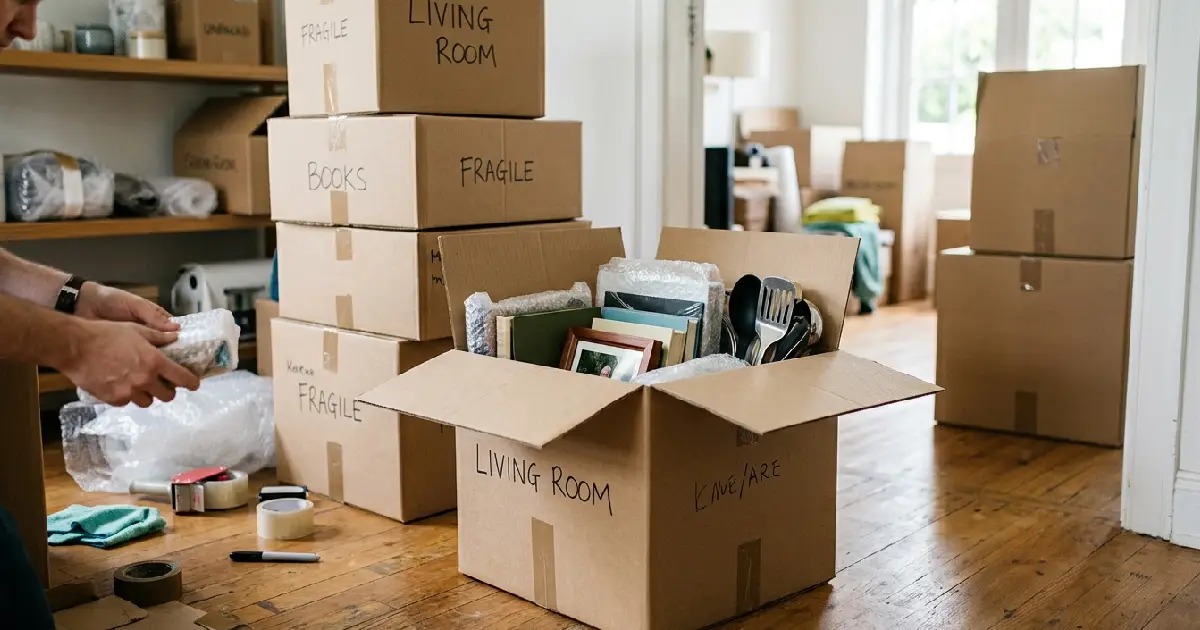
Moving to a new home can look straightforward until packing begins. Suddenly, everyday belongings need to be sorted, protected, labelled, transported, and unpacked without being damaged or misplaced. Boxes may contain anything from books to kitchenware, furniture can be heavy and awkward, and fragile possessions require an entirely different level of care.
A smarter moving strategy treats each category differently. Rather than putting everything into whatever box is available, careful preparation can make transportation safer while also making the new home much easier to organise.
Start by Reducing What Needs to Move
One of the most effective moving decisions happens before the first box is packed. Every unnecessary item adds weight, takes up space, and requires additional handling.
Go through rooms individually and decide what genuinely needs to reach the new property. Clothing that is no longer worn, duplicate kitchen items, unused furniture, outdated electronics, and forgotten storage items can often be donated, recycled, sold, or responsibly discarded.
This process also provides a clearer picture of how many boxes, packing materials, and larger transportation arrangements will actually be required.
Pack Boxes According to Weight and Purpose
A common packing mistake is choosing boxes based only on how much they can hold. Weight matters just as much as available space.
Books, tools, canned foods, and similarly dense possessions are usually better placed in smaller boxes. Lighter belongings such as bedding, cushions, towels, and clothing can go into larger containers. This keeps individual boxes manageable and reduces the chance of the bottom giving way during lifting.
It is also helpful to pack according to rooms rather than mixing unrelated possessions together. Clear labels identifying both the destination room and general contents can dramatically simplify unloading.
Give Furniture Its Own Moving Plan
Furniture presents different challenges because it cannot simply be placed inside a cardboard box. Before moving day, measure large pieces and compare their dimensions with doors, hallways, elevators, staircases, and other access points at both properties.
Where possible, removable components should be taken off before transportation. Table legs, shelves, bed frames, drawers, and detachable sections can make large pieces easier to maneuver.
Keep screws, bolts, brackets, and other small hardware together in clearly labelled bags. Attaching these bags securely to the corresponding furniture or storing them in one dedicated hardware container can prevent frustrating searches during reassembly.
Furniture blankets, protective covers, and suitable wrapping can also reduce scratches and surface damage during handling.
Treat Fragile Items as a Separate Category
Glassware, ceramics, artwork, mirrors, electronics, and sentimental possessions require more than a simple “fragile” label.
Each item should have enough cushioning to limit movement and prevent direct contact with neighbouring objects. Empty spaces inside boxes can be filled with appropriate packing material so contents do not shift whenever the box is carried or transported.
Fragile containers should not be overloaded. A moderately filled box that can be controlled easily is generally more practical than a heavy container packed with breakable possessions.
For households using professional services such as A1 Removals, identifying particularly delicate, valuable, unusually shaped, or heavy belongings in advance can also help ensure appropriate planning before moving day.
Create a Loading Order Before the Move Begins
Loading without a plan can create unnecessary work. Large and sturdy belongings typically need to be positioned strategically, while delicate boxes should be protected from excessive pressure and movement.
Think of the moving vehicle as a limited storage space rather than an empty area that simply needs filling. Furniture, appliances, boxes, and unusually shaped possessions should be arranged to reduce movement while maintaining stability.
Items needed immediately after arrival should also remain accessible instead of disappearing behind everything else.
Prepare an Essentials Box
Not everything should be packed for later. Prepare one clearly identifiable container with essentials for the first several hours in the new property.
This might include phone chargers, basic toiletries, medications, cleaning supplies, toilet paper, bottled water, snacks, important documents, basic tools, and a change of clothes. Families with children or pets may need additional essentials.
Having these necessities available means there is no need to open ten different boxes just to find one important item.
Make Unpacking Part of the Strategy
A successful move does not finish when everything reaches the destination. Good packing should make unpacking easier.
Place labelled boxes directly into their intended rooms instead of creating one enormous pile. Assemble essential furniture first and unpack according to immediate priorities. Bedrooms, bathrooms, and basic kitchen necessities often deserve attention before decorative items.
A smarter moving strategy ultimately comes down to organisation. When boxes, furniture, fragile possessions, and essentials each have their own plan, moving becomes a structured process rather than a series of last-minute decisions. Thoughtful preparation protects belongings, improves efficiency, and makes settling into a new home considerably easier.